
Cat Care
Creating a Cat-Friendly Home
By The Freyas Cat Rescue team · · 9 min read
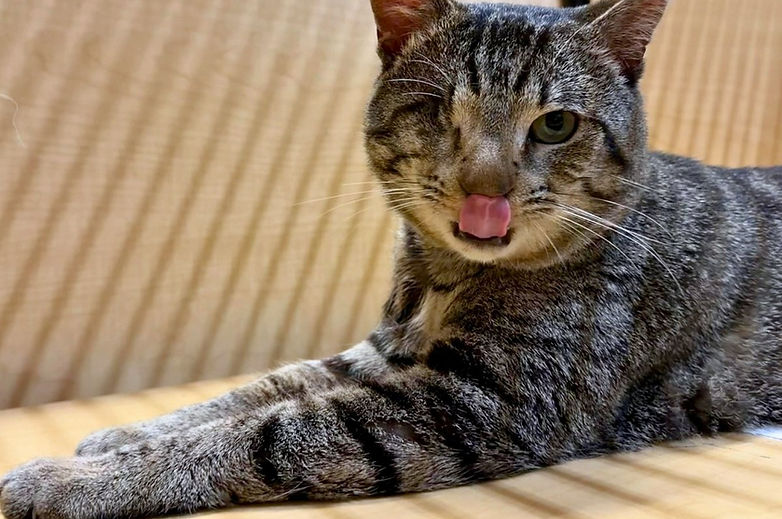
Cats read a home differently than we do. They notice escape routes, sightlines, height, and where resources sit relative to doorways. A room that feels comfortable to you can feel exposed and stressful to a cat.
The good news is that making a home cat-friendly is mostly about arrangement rather than expense.
Think vertically
Floor space is the least useful space in a cat's world. Height provides safety, a vantage point and territory that does not conflict with anyone else's. A small apartment with three good climbing routes can be richer than a large house with none.
Cat trees are the obvious solution, but cleared shelves, the top of a sturdy bookcase, a window perch or a stable cabinet work equally well. Aim for a route the cat can take upward in stages rather than a single tall object requiring one big jump — this matters especially for older or heavier cats.
Place resources thoughtfully
Where things sit matters as much as whether they exist. Cats dislike eating next to their toilet, and they dislike being cornered while doing either.
- Keep food and water well away from litter boxes
- Place litter boxes in quiet locations with a clear line of sight and no dead ends
- In multi-cat homes, spread resources across rooms rather than clustering them
- One litter box per cat plus one extra is the common guideline
- Provide multiple water sources; some cats prefer running water from a fountain
- Avoid placing bowls or boxes next to noisy appliances
Hiding places are not a problem to solve
People often try to block hiding spots so the cat is forced to socialize. It backfires. A cat with a reliable retreat becomes bolder over time, because retreat is available if needed. A cat without one stays on alert.
Provide hiding options you can live with: a covered bed, a cardboard box on its side, the space under a chair with a blanket over it. Then leave the cat alone when it uses them.
Scratching, planned rather than fought
Cats scratch to maintain their claws, stretch and mark territory. It is not optional behavior, and it cannot be trained away — only redirected.
Put scratching surfaces where the cat actually wants to scratch, which usually means near sleeping areas and in the rooms the family uses most. Offer both vertical posts and horizontal cardboard, since individual cats have strong preferences. Posts should be tall enough for a full stretch and stable enough not to wobble; a post that tips once may never be used again.
Windows, light and things to watch
A window with a view is one of the cheapest enrichment upgrades available. A perch or a piece of furniture at sill height turns a passive window into an activity. Bird feeders positioned safely outside — away from where cats could reach birds — give indoor cats hours of interest.
Ensure screens are secure. Cats lean on screens, and an unsecured screen at height is a serious danger.
Safety checks worth repeating
Home hazards accumulate quietly. It is worth doing a walk-through every few months rather than only when a new cat arrives.
- Remove lilies entirely; they are extremely dangerous to cats
- Store string, ribbon, hair ties and floss where a cat cannot reach them
- Secure loose blind cords
- Keep medications, cleaning products and antifreeze in closed cabinets
- Check appliance doors before closing them
- Keep small items that could be swallowed off floors and counters
Multi-cat households need duplicates
Most conflict between cats is competition over resources, often invisible to the humans involved. A single litter box in a corridor, one food bowl, or one prime window seat creates pressure even when nobody is fighting openly.
Duplicating resources and spreading them out removes the competition. So does providing enough vertical space that two cats can occupy the same room at different heights without either feeling crowded.
Routine is part of the environment
Cats are strongly routine-oriented. Feeding at consistent times, playing at roughly the same point in the evening, and keeping furniture arrangements reasonably stable all reduce background stress.
When change is unavoidable — moving, renovation, a new household member — introduce it gradually where you can, and give the cat a quiet, unaffected room to retreat to while it happens.
Related reading
- Enrichment Ideas for Indoor Cats
Indoor cats are safer, and that safety comes with an obligation: everything interesting in their world has to be provided by you.
- How to Introduce Two Cats
Almost every long-term conflict between cats traces back to an introduction that happened too fast. Slowing down costs a few weeks and prevents years of tension.
- How to Prepare Your Home for a New Rescue Cat
The work you do before a rescue cat arrives shapes the first two weeks more than anything you do afterwards. Here is how to set up a home a nervous cat can actually settle into.